
Non-negotiability of peace and unity in Ogbomosoland
Yomi OYEDEJI
Advertisement

Advertisement

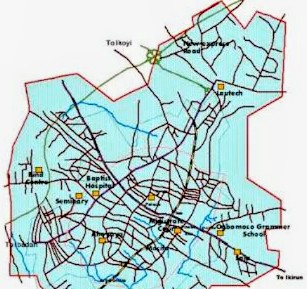
In every generation, history presents a people with defining moments, moments when ancient rivalries must give way to collective destiny, when pride must bow to purpose, and when unity becomes not merely desirable but absolutely necessary. For Ogbomoso Land, that moment is now. Ogbomoso is not just a geographical expression in Yoruba land and by extension in Nigeria; it is a civilization built on courage, resilience, enterprise, and shared ancestry. Comprising the present-day local governments of Ogbomoso North, Ogbomoso South, Surulere, Ogo Oluwa, and Oriire, the land represents one of the most historically significant regions in Yorubaland and indeed in Nigeria. It is the great gateway between the South-West and the North, a strategic corridor that has shaped commerce, migration, culture, and security for centuries. The greatness of Ogbomosoland did not emerge from one town alone. It is the collective heritage of the ancient clans and kingdoms of Orile Igbon, Ikoyi Ile, Iresa Land, Ijeru, the central city of Ogbomoso, and numerous towns and villages spread across the land. Each of these ancient settlements possesses a proud history, noble traditions, and respected royal institutions. The Olugbon of Orile Igbon, the Onikoyi of Ikoyi Ile, the Aresa of Iresaland, the Onpetu of Ijeruland, and the Soun of Ogbomoso all occupy revered positions within the traditional structure of the land. These royal stools are not competitors in the preservation of Ogbomoso heritage; they are co-custodians of a common destiny. However, history also records a unique turning point that altered the political and symbolic leadership structure of Ogbomosoland. Though the central city of Ogbomoso was among the later settlements to emerge in the region, providence and bravery elevated it to a central leadership role in Yorubaland history. The legendary founder of Ogbomoso, Soun Ogunlola, became immortalized through the defeat of the feared warrior Elemosho, an act that liberated and secured the old Oyo Empire at a critical period. That heroic intervention transformed Ogbomoso from a frontier settlement into a fortress of protection for the Yoruba people. It was from that point that the Soun increasingly assumed a rallying leadership role over the wider Ogbomoso territory. This historical reality eventually gained formal governmental recognition in 1993 when the title was officially modified to “The Soun of Ogbomoso Land” by the Oyo State Government. That recognition did not erase the importance or dignity of the other traditional rulers; rather, it acknowledged the evolved political and historical position of the Soun as the unifying traditional head of the wider Ogbomoso territory. Yet, decades after that recognition, tensions and disagreements over hierarchy and authority still linger among some stakeholders within the land. While many citizens naturally identify themselves as subjects of the Soun of Ogbomoso Land, some traditional institutions continue to contest aspects of that reality. These disagreements, though understandable within the context of history and identity, must not be allowed to weaken the collective future of Ogbomoso Land. No kingdom rises when its leaders pull in different directions. Today, the challenges confronting Ogbomosoland are far greater than questions of royal precedence. Ogbomosoland faces mounting developmental demands, youth unemployment, economic competition, infrastructural deficits, political marginalization risks, high level of religious division and increasingly dangerous security threats arising from the invasion of bandits and criminal elements into parts of the South-West and surrounding regions. At the same time, the politics of leadership within Oyo State is becoming increasingly strategic and competitive. In such a season, divided voices diminish influence, while united voices command respect and negotiation power. This is why the peace and unity of Ogbomoso Land is no longer optional, it is unnegotiable.
Advertisement

Advertisement

The current Soun of Ogbomosoland deserves commendation for articulating a visionary 25-year development plan for Ogbomosoland, arguably the first long term strategic developmental blueprint ever conceived for the entire Ogbomoso Land. Such a vision demonstrates foresight, courage, and commitment to posterity. But no matter how brilliant a vision may be, no single throne, no single king, and no single town in Ogbomosoland can accomplish it alone. Development thrives where unity exists. The Soun of Ogbomosoland must therefore demonstrate inclusive leadership, diplomacy, humility, consultation, and respect toward all traditional institutions within Ogbomoso Land. Leadership is strongest not when it dominates, but when it unites. The other eminent and revered royal fathers must equally rise above historical grievances and embrace collaboration for the common good of our people. History will not remember who won arguments over superiority; history will remember who preserved and advanced the destiny of Ogbomoso Land. The traditional rulers of Ogbomosoland must collectively become a council of wisdom, security, development, and cultural preservation. Together, they can champion regional security coordination, attract investment, improve education, strengthen agriculture, support industrialization, promote cultural tourism, and position Ogbomoso Land as one of the leading economic hubs in the South West in particular, and in Nigeria in general. The people themselves also have responsibilities. Citizens must stop fueling divisions on social media, in political gatherings, and within religious and community associations. The younger generation especially must understand that loyalty to one’s ancestral town should never translate into hostility against the broader Ogbomoso identity. A divided house weakens itself before outsiders. The Yoruba race has always understood the value of collective strength. One of the timeless Yoruba sayings declares: “Igi kan kò dá igbó ṣe.” One tree does not make a forest. Ogbomosoland is strongest when Orile-Igbon prospers alongside Ogbomoso, when Ikoyi-Ile advances alongside Iresa, when Ijeru grows alongside every surrounding community. Shared prosperity must become the new philosophy of the land. The security threats facing Ogbomoso land today alone should awaken the consciousness of unity. Banditry and criminal invasions do not recognize clan boundaries or traditional rivalries. Criminals attack communities, not titles. If insecurity spreads, every town suffers alike. Therefore, collective security cooperation among all local governments, communities, and traditional rulers is essential. This is also the time for political maturity. The sons and daughters of Ogbomoso Land occupy strategic positions across Nigeria and the diaspora. Their resources, influence, and expertise can only be maximized when there is a united regional vision supported by all royal fathers and political stakeholders. Ultimately, unity does not mean uniformity. The various kingdoms, clans, and traditional institutions within Ogbomoso Land can retain their proud identities while still submitting to a shared regional purpose. Diversity within unity is the true strength of civilization. The future generation of Ogbomoso people deserves to inherit a land united by purpose, secured by cooperation, and transformed by visionary leadership. The time has come for all sons and daughters of Ogbomoso Land, the traditional rulers, political leaders, elites, youths, religious leaders, and community stakeholders to rise above historical disputes and embrace the higher calling of collective destiny. Because when history finally writes the next chapter of Ogbomoso Land, the defining question will not be: “Who was greater?” The defining question will be: “Who preserved the unity and destiny of the land when it mattered most?” Please pardon my historical naivety. My intention is not historical but the UNITY OF OUR GREAT OGBOMOSOLAND.
ILE OGBOMOSO A GBE GBOGBO WA O.
Advertisement

Oyedeji, of Ile Arubusola, Baale Masifa, Masifa, Ogbomoso











Leave a Reply