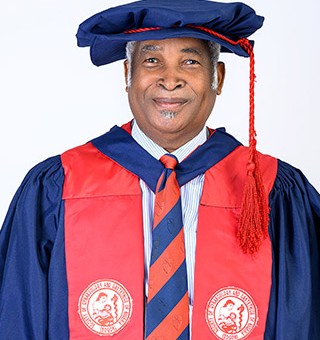
From Ogbomoso to the World: Celebrating Professor Oladapo Ladipo’s outstanding legacy in healthcare, by Victor OLAWUYI
Honouring a lifetime of service and the distinguished winner of the 2026 Private Sector Health Alliance of Nigeria (PSHAN) Medical Practitioner Hall of Fame Award.
Advertisement

Advertisement

Advertisement

Advertisement

The award bears one name, but the career it celebrates reaches across generations. With his recognition as the winner of the 2026 PSHAN Medical Practitioner Hall of Fame Award, Professor Oladapo Alabi Ladipo receives another honour for a life devoted to medicine, reproductive health and the welfare of communities. It is an occasion to celebrate the work behind the recognition: the research, teaching, advocacy and patient service sustained over nearly six decades since his qualification as a doctor.
The Private Sector Health Alliance of Nigeria has themed its 2026 awards around legacy builders in Nigerian healthcare. Ladipo’s career gives that theme substance. His work has connected specialist medicine with community needs, and academic knowledge with the practical organisation of services. The value of that contribution becomes clearer when we follow the journey from his beginnings in Ogbomoso to his influence in national and international reproductive health.
Born at the Baptist Hospital in Ogbomoso on September 23, 1941, Ladipo turned 85 this year. In his published recollections, he describes a childhood spent in different parts of Nigeria as his father’s forestry-service postings took the family from place to place. He attended Baptist Boys’ High School, Abeokuta, from 1954 to 1958, where responsibility for the school dispensary helped awaken his interest in medicine. In 1959, he travelled to Britain and studied at Norwood Technical College, London.
He qualified in medicine at the University of Wales, Cardiff, in 1967 and specialised in obstetrics and gynaecology. His early appointments included Cardiff Royal Infirmary, Royal Gwent Hospital in Newport and St David’s Hospital, Cardiff. These were the foundations of a career that would bring British medical training into sustained dialogue with Nigerian healthcare needs. His later professional record also includes service as a locum clinical professor and head of department at the University of Wales College of Medicine.
Advertisement

In 1972, he joined the Department of Obstetrics and Gynaecology at University College Hospital, Ibadan. His work there, combined clinical practice, teaching and research. ARFH’s institutional biography records his contribution to programmes involving laparoscopy and contraceptive technologies, including intrauterine devices and implants. He progressed through academic and consultant appointments to become a professor, bringing the responsibilities of scholarship and patient care together.
An especially revealing account appears in the World Health Organization’s record of its 1993 Sasakawa Health Prize. WHO documented his leadership of UCH’s Fertility Research Unit from 1980 and described work that carried community health and family planning from a medical-school project into government primary healthcare. The initial rural programme trained 171 village health workers, including traditional birth attendants, in basic services, contraception and safer childbirth. Community surveys and discussions helped shape the intervention.
That record shows the practical questions behind his scholarship: how to reach people outside hospitals, prepare workers and earn community trust. His approach gave local knowledge and public institutions a place in delivering care. This remains an instructive feature of his career. His research record continued to address access. A 2013 study he co-authored examined community distribution of injectable contraceptives by trained community health extension workers in Gombe State. The pilot reported encouraging service-delivery results and no injection-related complications during the study. Its findings supported the feasibility of bringing selected services closer to communities under the arrangements studied. The paper illustrates his continuing interest in testing practical approaches to reproductive healthcare.
A separate 2011 paper, co-authored with ARFH colleagues, examined an intervention involving 250 trained community agents in ten rural local government areas across five Nigerian states. Its evaluation reported an increase in current contraceptive use from 16 per cent at baseline to 37 per cent. These were findings within the participating project communities. Such studies allow other professionals to examine an intervention, question its methods and learn from its results.
Institutional biographies credit him with an extensive body of scientific publications. APIN’s published profile lists more than 190 peer-reviewed publications. Beyond the number, the combination of research, clinical work and programme development is significant. It demonstrates a sustained effort to make evidence useful to practitioners, health planners and communities, while keeping service-delivery problems within the concerns of academic medicine.
Advertisement

In 1989, Ladipo and Chief Mrs Grace Ebun Delano co-founded the Association for Reproductive and Family Health. Registered in 1991, ARFH became a major indigenous Nigerian nonprofit. Their partnership deserves recognition, alongside the contributions of successive leaders, staff, communities and partners. ARFH now identifies Ladipo as its President Emeritus and co-founder.
Here lies a substantial contribution to enterprise and management. Building a durable organisation requires capable teams, responsible use of resources and the confidence of partners. ARFH’s continued work demonstrates that achievement. In my view, this is a form of social entrepreneurship that deserves recognition in any account of Nigerian healthcare leadership.
ARFH describes a portfolio of more than 120 health and development projects across Nigeria’s 36 states and the Federal Capital Territory, with work extending to neighbouring countries. Its programmes encompass reproductive, maternal, newborn, child and adolescent health, alongside HIV, tuberculosis, malaria and support for vulnerable children. The organisation also reports receiving special consultative status with the United Nations Economic and Social Council in 2007. These are institutional achievements built through collective effort, to which its founders gave direction.
The service platform is equally instructive. ARFH’s Olikoye Ransome Kuti Medical Centre provides reproductive-health services, counselling and referrals. Its published clinic information also identifies the Professor Oladapo Ladipo Youth Friendly Clinic, offering adolescents sexual and reproductive-health support, family planning counselling, treatment of sexually transmitted infections and referral where needed. ARFH lists satellite service points in Yemetu, Ibadan, and Ijeru, Ogbomoso, bringing its work into familiar community settings.
The youth clinic is a particularly fitting expression of his legacy. A young person seeking help needs somewhere to ask questions, obtain accurate information and receive appropriate care. Giving that need a place within an organisation’s services turns concern for the next generation into a practical responsibility. It is a principle that health institutions, schools and community leaders can carry forward.
Advertisement

Ladipo’s career also extended well beyond Nigeria. As Executive Secretary and Programme Director of South-to-South Cooperation in Reproductive Health in Bahia, Brazil, he coordinated research involving 15 countries across Africa, Asia and Latin America. The work focused on contraceptive technologies and microbicides. It placed him within an international scientific effort connecting countries whose health systems could learn from one another’s experience.
The Hallmarks of Labour Foundation identifies him as the first Nigerian elected President of the African Federation of Obstetrics and Gynaecology. His professional record also includes national reproductive-health technical leadership and a founding chairmanship of the Association for the Advancement of Family Planning in Nigeria. His advisory and governance experience has involved organisations such as IPPF, Jhpiego, Pathfinder International and APIN. These responsibilities reflect the reach of his contribution beyond his own institution.
His honours provide further landmarks. In 1993, WHO awarded the Sasakawa Health Prize jointly to Ladipo and Grace Ebun Delano, with the Arpana Research and Charities Trust of India also recognised that year. The Nigerian recipients’ community-health work was described in the award record. That recognition established an important international acknowledgement of their practical approach to extending care.
In 2018, he was among the recipients of the inaugural Lifetime Achievement Awards in Family Planning and Reproductive Health at the International Conference on Family Planning in Kigali, Rwanda. Grace Delano, Bill Gates Sr. and Klaus Brill were also honoured. The conference’s own record confirms the award, placing his contribution within a global celebration of sustained work in reproductive health.
His distinctions also include the national honour of Officer of the Order of the Niger and a University of Ibadan lifetime achievement award in 2018, as recorded in institutional profiles. In December 2021, he received the Hallmarks of Labour Role Model Award for outstanding contributions to medicine. The 2026 PSHAN recognition adds another chapter to this record of national and international appreciation.
Advertisement

His standing as an advocate remains visible in recent public debate. In September 2026, PUNCH reported his call for the Federal Government to allocate at least one dollar per woman of reproductive age towards family planning commodities. He argued for greater domestic responsibility for supplies and raised concern about dependence on donor support. At 85, he was still pressing for practical commitments to access and equity.
UNFPA’s Icons and Activists initiative also features Ladipo among figures associated with reproductive-health progress. In that account, he connects family planning with family economic wellbeing, education, quality of life and the environment. His perspective has consistently placed reproductive health within a wider development conversation. The implication for public leadership is clear: health deserves a central place in decisions about the future of communities.
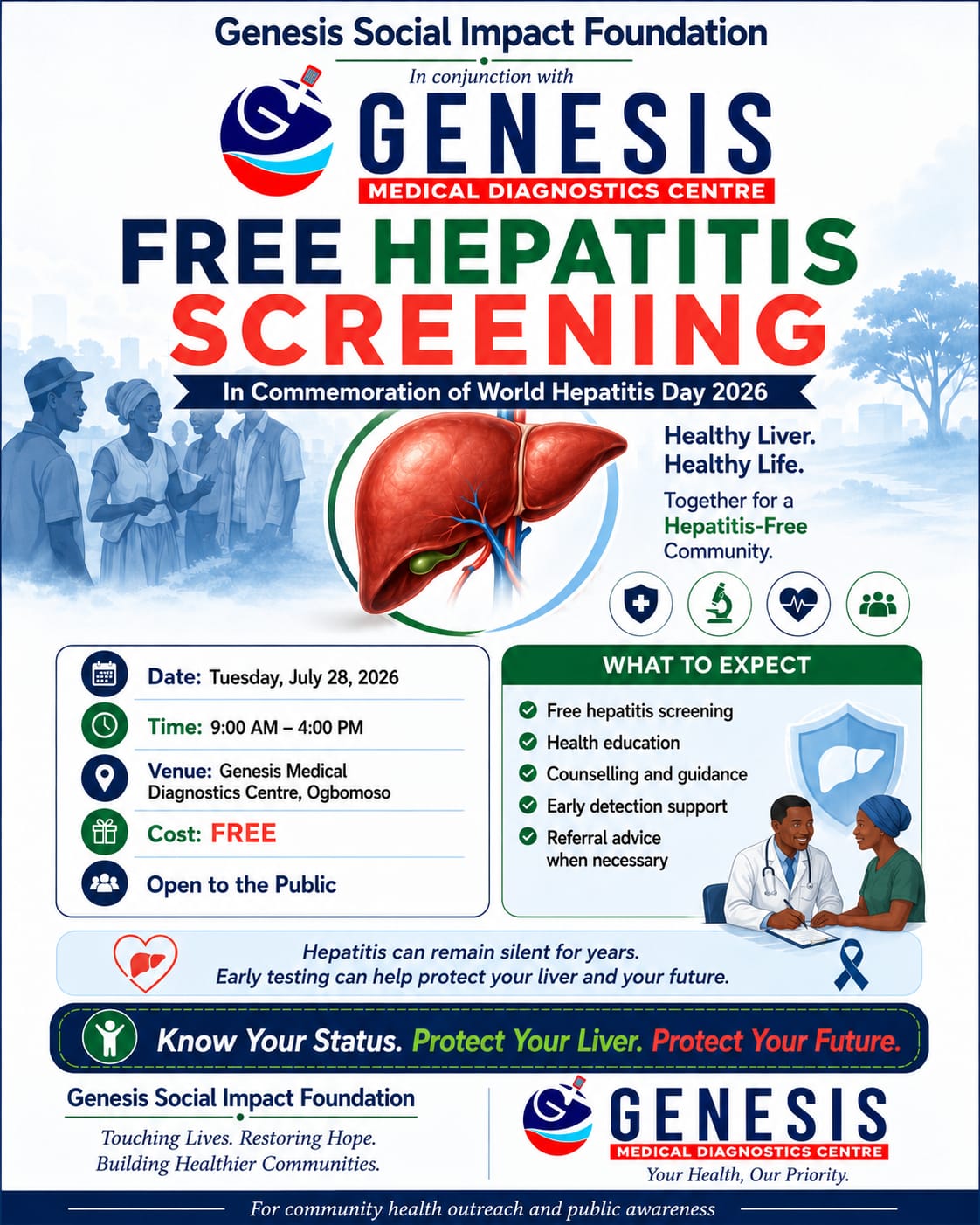
For Ogbomoso, this celebration has an additional meaning. A career with international reach has remained connected to local service. Reporting in October 2025 identified Ladipo as chairman of the health committee supporting the Soun of Ogbomosoland’s 25-year development vision. It documented his leadership of a delegation to Genesis Medical Diagnostics Centre, where the committee encouraged the centre’s contribution to grassroots healthcare and its alignment with the community’s development priorities.
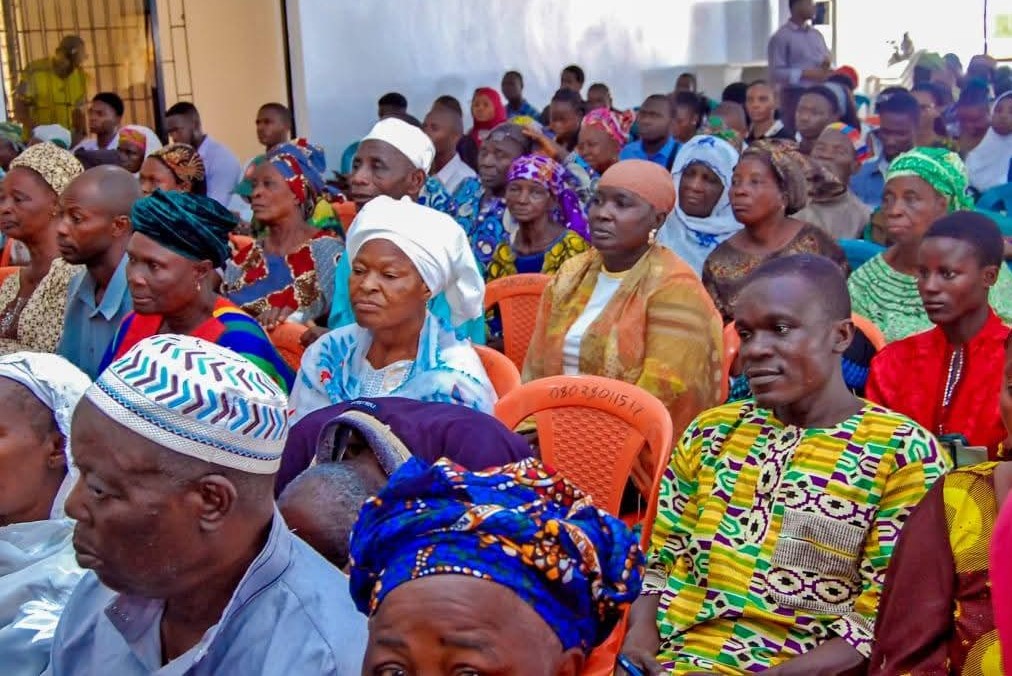
Further reporting in April 2026 described collaboration between that committee and Genesis on a March 28 community programme addressing hypertension and diabetes. This local engagement matters. It shows how senior professional experience can support preventive health, public education and cooperation among traditional leadership, clinicians and diagnostic services. For those of us building healthcare institutions in Ogbomoso, that encouragement carries real value.
Advertisement

There is also a lesson in how he speaks about success. In his October 2026 interview with PUNCH, Ladipo placed particular emphasis on mentoring younger people and acknowledged the support of his wife and family. The desire to prepare others gives a professional legacy continuity. Teaching a younger colleague, opening an opportunity and insisting on careful work can influence patients and institutions far beyond one’s own years of practice.
As a biomedical scientist working in diagnostics and reproductive health, I see much to learn from this career. Scientific competence needs the support of sound organisation, cooperation across professions and a willingness to understand community needs. His example encourages younger practitioners to ask how their training can improve the services around them, and how the institutions they build can continue to serve future generations.
The best way to honour such service is to carry its responsibilities forward: support sound research, strengthen local institutions, mentor younger professionals and make access to care a practical priority. His career offers material for celebration, but also for reflection on what Nigeria should expect from its healthcare leaders and what it should do to support them.
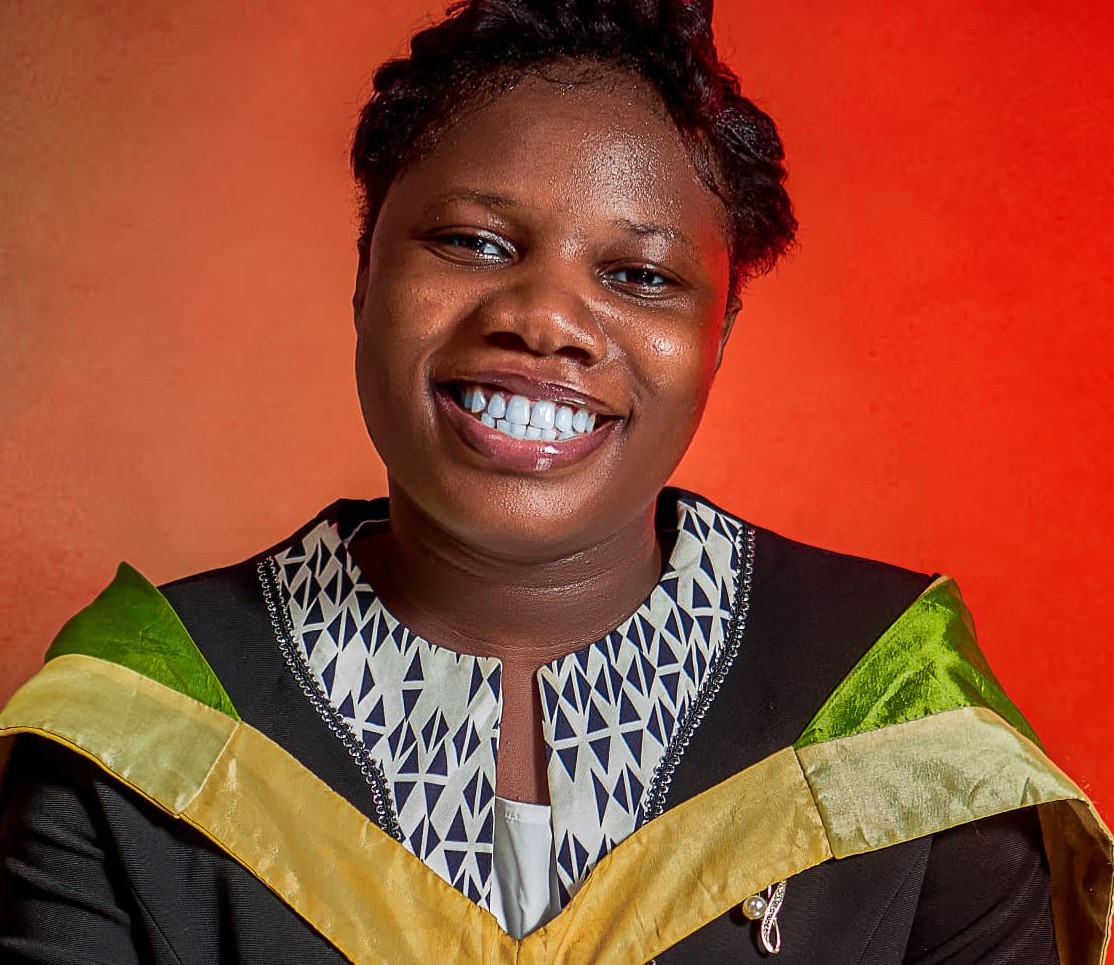
On behalf of Genesis Medical Diagnostics Centre, Ogbomoso, I congratulate Professor Oladapo Alabi Ladipo on the 2026 PSHAN Medical Practitioner Hall of Fame Award. We celebrate the clinician, scholar, institution builder and community leader whose life’s work gives this honour its meaning. May he enjoy continued good health, strength and fulfilment, and may the knowledge and institutions he has helped build continue to serve humanity for generations to come.

Prince Victor Olawuyi
Prince Olawuyi is author and CEO, Genesis Medical Diagnostics Centre, Ogbomoso
Advertisement
Advertisement

Advertisement

Advertisement