

Umahi, Rufai and Makinde trajectory on Coastal Highway: A critical perspective
David OGUNKAN
Advertisement

The recent controversy involving the Minister of Works, David Umahi, Journalist Rufai Oseni, and Governor Seyi Makinde over the Lagos–Calabar Coastal Highway raises broader questions about professionalism, public communication, and the politicization of national infrastructure. It has generated passionate reactions across media spaces, yet much of the debate has been driven by emotion rather than informed understanding. A more sober analysis reveals that the minister’s intervention was technically sound, the journalist’s questioning was overreaching, and the governor’s comment was both unnecessary and misplaced.
Umahi’s statement was neither accidental nor evasive; it was a deliberate and carefully considered response to a question that lacked contextual precision. Governor Makinde’s remark that the minister was “dancing around the question” reflected a poor grasp of the technical realities surrounding large-scale infrastructure projects. The governor’s interjection was an unwarranted attempt to insert himself into a matter that did not directly concern his administration. It appeared more like a political gesture aimed at demonstrating familiarity with infrastructure governance than a substantive contribution to the ongoing discourse. By drawing himself into the issue, the governor not only misread the context but also trivialized a matter that required technical interpretation rather than political commentary.
Minister Umahi had, in previous interviews on Arise Television, thoroughly explained the financial framework and cost determinants of the Lagos–Calabar Coastal Highway. He discussed the complexities of terrain, soil conditions, design specifications, and engineering requirements that account for variations in project costs. These explanations were consistent with globally accepted standards in infrastructure project management. Despite this, Rufai Oseni continued to approach the subject from a standpoint of skepticism and confrontation, often framing questions in a manner that appeared intent on discrediting the project and the minister. Such an approach reduces journalism to activism and obstructs public understanding of developmental issues that require factual and technical exposition.
The minister’s refusal to provide a specific figure for the cost per kilometer was not a sign of evasion but a reflection of professional caution. In project cost analysis, the distinction between estimated cost and actual cost is fundamental. The minister rightly emphasized that the cost per kilometer of the coastal highway could not be uniform because it depends on several variables, including the type of terrain, soil stability, design complexity, and the number of bridges, interchanges, and other engineering components along the route. He pointed out that what can be reasonably discussed at this stage is an average cost per kilometer, which will only be definitive after the project is completed and all technical variations have been accounted for.
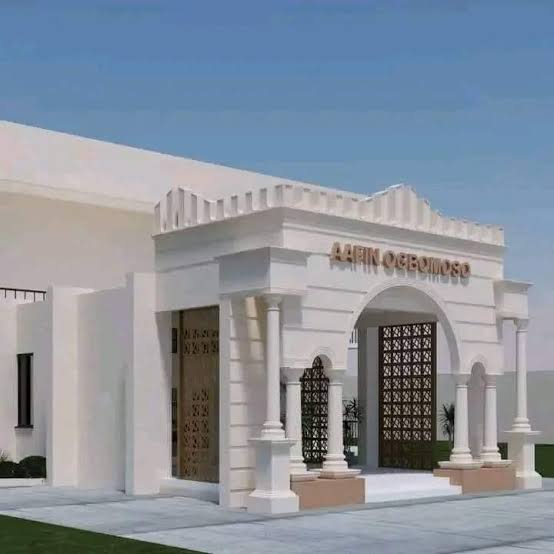
By contrast, Governor Makinde was able to reference definite figures for the Ogbomoso–Iseyin Road because it is a completed project whose scope, materials, and final quantities are known and verified. It is therefore misleading to equate a completed state road with a federal coastal highway still under construction and subject to changing economic and environmental conditions. In a country where inflation, currency depreciation, and material price volatility are recurring realities, even the most carefully prepared cost estimates remain provisional until final certification. It would therefore be professionally irresponsible for any project manager or minister to declare a definitive cost per kilometer before project completion.
Advertisement

The Bill of Quantities (BOQ), which serves as the fundamental cost control document in project implementation, provides a baseline estimate derived from feasibility studies, detailed engineering designs, and tender evaluations. It establishes a framework of unit rates and projected quantities based on available data and assumptions at the time of contract award. However, the BOQ is not a statement of actual cost; it is a dynamic document that evolves as the project progresses. The figures contained in it are subject to adjustment based on site realities, scope modifications, and market fluctuations. Asking the minister to quote an actual cost per kilometer for an ongoing project is, therefore, not only technically inappropriate but also potentially misleading to the public.
It is equally important to emphasize that cost parameters in large-scale infrastructure projects are influenced by numerous externalities beyond the control of the executing agency. Exchange-rate movements, inflationary trends, logistics disruptions, and design modifications all contribute to cost variations over time. To present a single, static figure in such a fluid context would not only misrepresent the reality of project financing but also expose public officials to unfounded accusations of inconsistency when subsequent adjustments occur. The minister’s insistence on waiting until project completion before releasing definitive figures reflects an adherence to technical integrity and financial prudence.
Public accountability in project management is not achieved through speculative disclosures but through verified data and transparent documentation at the appropriate stages. Premature disclosure of incomplete figures for political or journalistic satisfaction undermines public confidence in technical governance. A more responsible approach is to allow the project to reach measurable milestones, after which financial and physical progress can be accurately correlated and audited. Such discipline is what distinguishes professional project delivery from populist communication.
Advertisement.
The Lagos–Calabar Coastal Highway is a transformative national investment with far-reaching implications for regional connectivity, trade, and coastal development. It is one of the most ambitious infrastructure projects in Nigeria’s recent history and demands a high level of technical rigor and fiscal discipline. Discussions surrounding it should therefore be informed by evidence and professional reasoning, not political rivalry or media sensationalism. The role of public officials, journalists, and political leaders alike should be to promote clarity, not confusion; to enhance accountability, not to exploit ignorance.
Minister Umahi’s position reflects a deeper understanding of the ethics of professional practice. Accuracy must precede publicity, and facts must take precedence over conjecture. The insistence on providing verifiable figures only when they are ready is consistent with best practices in infrastructure management worldwide. It is an approach that values technical truth over populist applause. In an environment where public discourse is often shaped by emotion rather than expertise, such restraint should be seen not as weakness but as a mark of professional strength.
Governor Makinde’s intervention, in contrast, underscores a troubling tendency among public figures to conflate political commentary with technical analysis. His reference to the minister’s handling of the interview added no analytical value to the conversation and detracted from the real issues at stake. Political actors should resist the temptation to insert themselves into matters that require technical competence beyond their administrative jurisdiction. National projects such as the coastal highway should be viewed through the lens of collective interest, not political competition.
Ultimately, the debate surrounding the Lagos–Calabar Coastal Highway illustrates the urgent need for more informed public engagement with infrastructure governance in Nigeria. The media must commit to context-based reporting; political leaders must respect the boundaries of technical administration; and professionals must continue to uphold the principles of accuracy, transparency, and accountability. Umahi’s insistence on data-driven communication and project-based evaluation should therefore be recognized as a necessary step toward restoring integrity in the public management of national infrastructure.
The Lagos–Calabar Coastal Highway will undoubtedly transform the nation’s coastal corridor when completed. Its success depends not only on funding and engineering efficiency but also on how the public discourse surrounding it is framed. If the focus remains on facts rather than personalities, and on knowledge rather than speculation, Nigeria may yet set a new standard for how infrastructure is debated, executed, and communicated.
Ogunkan PhD is Associate Professor of Urban and Regional Planning, Bells University of Technology, Ota














Leave a Reply