
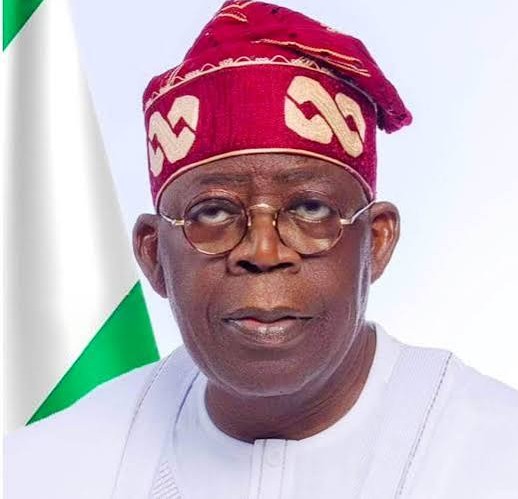
The silence of Afenifere: Restructuring, Confab report, and the Yoruba Presidency, by Lanre GBADAMOSI
Advertisement

Advertisement

There was a time when Afenifere’s voice was the loudest on restructuring.
Under Goodluck Jonathan, they pushed for the 2014 National Conference and celebrated its report as a blueprint for a fairer Nigeria.
Under Muhammadu Buhari, they never stopped demanding implementation. They issued communiqués, granted interviews, and framed every national crisis as proof that Nigeria could not survive without a return to true federalism.
Restructuring was not negotiable. It was survival.
Then May 29, 2023 came.
A Yoruba man, Bola Ahmed Tinubu, took the oath as President. And Afenifere’s fire went quiet.
The same organization that once treated every delay on restructuring as treason now treats it as a footnote.
The Confab report they swore by has vanished from their public statements. The urgency is gone. The pressure is gone. The moral crusade has been replaced by cautious silence, as if the mere presence of a Yoruba man in Aso Rock has cured the structural defects they diagnosed for decades.
Advertisement

Advertisement

Yet, the South West is bleeding. Insecurity has moved from the headlines into our forests and farmlands.
Kidnapping rings operate from Kwara, Ogbomoso, Ibadan, Oke Ogun to Ondo’s highways and forests.
Farmers in Ibarapa abandon their crops. Traditional rulers are ambushed and killed.
Amotekun, which Afenifere once hailed as a child of necessity, is overstretched, underfunded, and constitutionally caged.
These are precisely the conditions that Afenifere once argued restructuring would solve: state police, control of local security, resource control to fund protection, and a constitutional order that lets regions act without begging Abuja.
So what has Afenifere been saying? Very little.
Advertisement

The occasional statement laments insecurity but avoids the word “restructuring.” The 2014 Confab report, which recommended state police and devolution of powers, is no longer cited. Press releases now lean toward appeals for patience and calls for unity. The logic is unspoken but clear: you don’t attack the system when your son heads it. You don’t demand radical change when your kinsman sits on the throne. Political convenience has replaced ideological consistency.
This silence is costly. Restructuring was never about ethnic triumphalism.
It was about building a country where regions can secure themselves, develop at their pace, and stop blaming the center for every failure. If the South West cannot police its own forests under a Yoruba president, then the problem was never just who occupied Aso Rock.
It was the structure itself. Afenifere knew this in 2014. They knew it in 2018.
Their silence now does not change the facts on the ground. It only confirms what critics always feared: that for many of our elder statesmen, restructuring was a weapon for opposition, not a principle for governance.
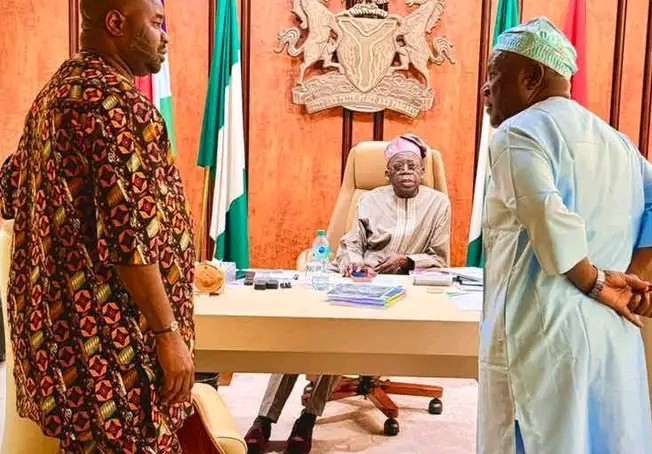
The front rows at Aso rock change, but the duty does not.
Influence is temporary. Positions are temporary. What lasts is the record you leave.
If Afenifere truly believes restructuring is the lasting solution to insecurity, then the time to speak is not when you are outside power, but when you have the ear of power.
Silence today will be read by history as complicity tomorrow. And the South West, facing kidnappers on its highways and fear on its farms, cannot afford complicity.
Lanre Gbadamosi, a public affairs analyst, author and editor, writes from Ogbomoso, Oyo state.













Leave a Reply