

New Year Message: Health is no longer optional
Victor Oyetayo OLAWUYI

CEO & Lead Consults, Genesis Medical Diagnostics Centre
Advertisement.
Advertisement

As Nigeria enters 2026, it is becoming increasingly dishonest to speak about national progress without speaking honestly about health. Health is not an abstract social good. It is the foundation upon which productivity, education, security, and economic stability are built. When health systems are weak, everything else becomes performative.
For too long, conversations around healthcare have been reactive, episodic, and driven by crisis. We mobilise after outbreaks, fundraise after disasters, and lament outcomes after lives have been lost. What we rarely do is invest consistently in the systems that prevent illness, detect disease early, and guide safe treatment.
At Genesis Medical Diagnostics Centre, our work over the years has been anchored on one conviction that experience has only strengthened: “no healthcare system can rise above the quality, accessibility, and integrity of its diagnostics.”
WHY DIAGNOSTICS SIT AT THE HEART OF HEALTHCARE
Every medical decision begins with a question: “What is wrong with the patient?”
That question is answered, not by intuition, but by diagnostics.
When diagnostic services are inaccessible, inaccurate, or delayed, medicine becomes guesswork. Drugs are prescribed blindly. Conditions worsen silently. Families spend scarce resources treating symptoms instead of causes. Hospitals become overcrowded with preventable complications.
Early and accurate diagnosis does more than save lives. It:
– reduces unnecessary hospital admissions
– limits inappropriate drug use
-lowers long-term healthcare costs
– preserves productivity and household income
Diagnostics is therefore not a supporting service. It is the gatekeeper of safe and effective medicine.


THE COST OF LATE DIAGNOSIS: A NATIONAL BURDEN
In many Nigerian communities, illness is addressed only when it interferes with daily survival. By the time patients seek care, conditions such as hypertension, diabetes, hepatitis, anaemia, or infectious diseases have already advanced.
The consequences are predictable:
– prolonged illness
– avoidable complications
– higher treatment costs
– preventable deaths
Late diagnosis is not merely a personal tragedy. It is an economic burden on families, employers, and the state. Productivity is lost, healthcare expenditure rises, and poverty deepens.
Preventive diagnostics is therefore not charity. It is economic sense.
Advertisement

Advertisement

OUR JOURNEY: BUILDING FROM THE GRASSROOTS
Genesis Medical Diagnostics Centre was established to confront this reality directly. From inception, our strategy was clear: quality diagnostics must not be restricted to major cities or affluent populations.
Over the years, our activities have been deliberately community-oriented. They include:
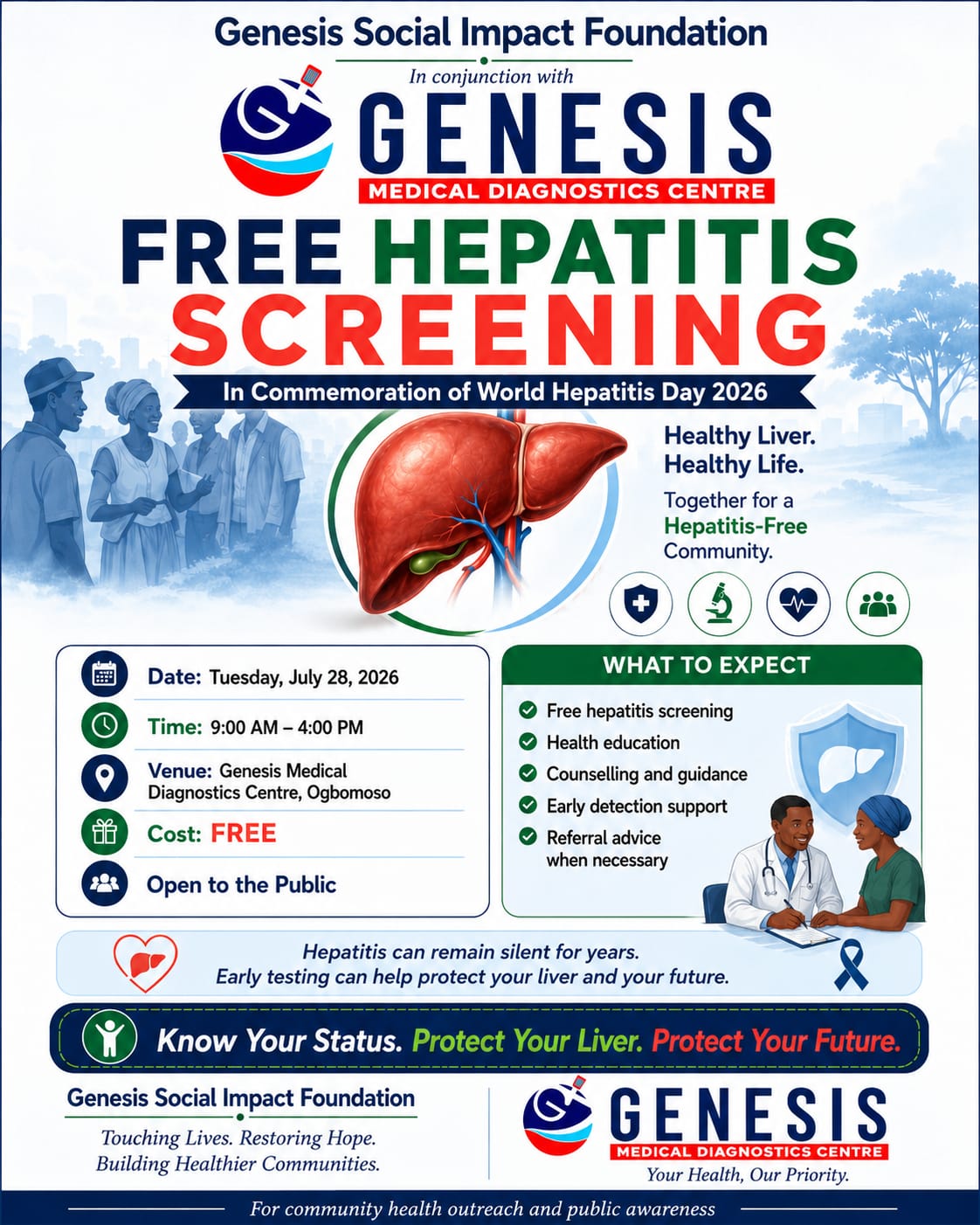
– Community-based diagnostic outreaches, offering free or subsidised screening for hepatitis, cardiovascular risk factors, anaemia, metabolic disorders, and infectious diseases.
– Targeted screening programmes for teachers, artisans, traders, and informal workers, groups that sustain communities yet often lack structured healthcare access.
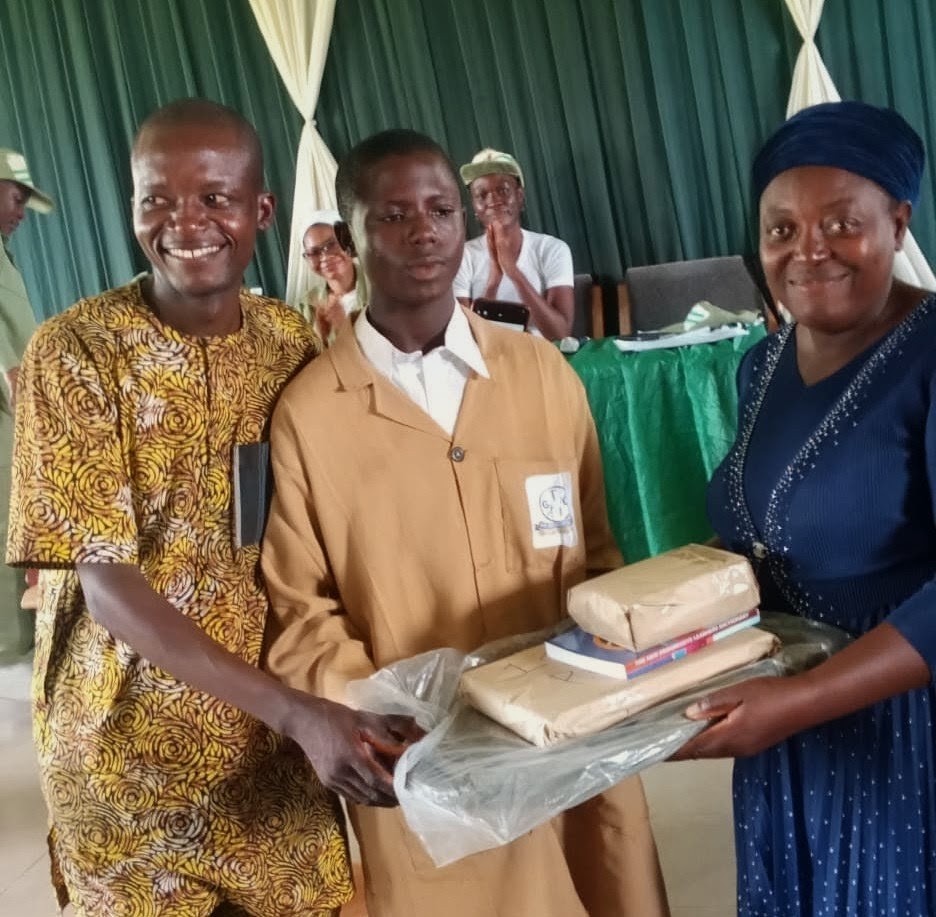
– School and youth health engagements, promoting preventive health awareness, early screening culture, and basic understanding of diagnostics.
-Support for community institutions, working with local leaders to promote trust, health literacy, and participation.
Each programme was designed to meet people where they are, not where systems assume they should be.


QUALITY IS NON-NEGOTIABLE
Operating at the grassroots does not justify compromised standards. On the contrary, it demands higher discipline.
Genesis has invested consistently in:
– skilled and certified biomedical scientists
– standardised laboratory procedures
– modern diagnostic equipment
– continuous quality control and assurance
– ethical reporting and data integrity
Accuracy is not a luxury. A wrong result can mislead treatment, waste resources, and cause harm. In diagnostics, quality is patient safety.
DATA: THE QUIET POWER OF DIAGNOSTIC MEDICINE
Every laboratory test contributes to a larger story. While clinicians focus on individual patients, diagnostic centres see patterns emerging across populations.
From routine testing, we observe:
– increasing prevalence of hypertension and metabolic disorders
– silent spread of hepatitis infections
– persistent anaemia, especially among women and children
– underreported reproductive and fertility-related conditions
This data is invaluable. It provides early warning signals long before conditions escalate into public health crises. In 2026, Nigeria must begin to recognise diagnostic data as a critical tool for “public health intelligence and planning.”
Private diagnostic centres are not just service providers. They are frontline observers of population health trends. Integrating this data responsibly into public health frameworks is no longer optional.
Advertisement

Advertisement.
BUILDING A SUSTAINABLE HEALTH WORKFORCE
Infrastructure alone does not deliver healthcare. People do.
One of the less discussed crises in Nigerian healthcare is workforce sustainability. Skilled professionals face burnout, poor structure, limited growth opportunities, and inadequate recognition. The result is a steady loss of talent.
Genesis has taken deliberate steps to address this by:
– mentoring and training young biomedical scientists
– providing professional exposure rooted in ethical practice
– promoting continuous learning and skills development
– reinforcing pride and professionalism in laboratory medicine
This is not an act of benevolence. It is a strategic investment in the future of healthcare delivery.


EQUITY IN HEALTH: REACHING THE LAST MILE
Health inequities persist across gender, geography, and income levels. Women, children, and rural populations often experience the greatest diagnostic gaps.
Maternal health, reproductive health, and chronic disease screening must be prioritised, not postponed. Many conditions affecting women remain undiagnosed due to cultural barriers, limited access, or cost.
Genesis continues to strengthen its focus on:
– women’s health diagnostics
– maternal and reproductive screening
– accessible services for underserved communities
Health equity is not achieved by intention alone. It requires systems that deliberately reach those most likely to be excluded.


INNOVATION WITH PURPOSE
As healthcare evolves, technology must be harnessed responsibly. The future of diagnostics lies not in spectacle, but in smarter, more efficient service delivery.
In 2026 and beyond, Genesis is strengthening:
– digital health record systems
– improved turnaround times for results
– integration with telemedicine and referral networks
– technology-driven quality assurance processes
Innovation must serve patients, not distract from care.
PUBLIC–PRIVATE COLLABORATION: A NECESSITY, NOT A CHOICE
No healthcare system can thrive through government effort alone. Equally, private providers cannot operate in isolation.
Resilient health systems are built through collaboration, where public and private institutions complement each other through:
– service delivery
– data sharing
– outreach programmes
– capacity building
In 2026, structured partnerships must replace fragmented efforts. Healthcare is too important for silos.
A DIRECT CALL AS WE ENTER 2026
As citizens, we must stop normalising late hospital visits and self-medication. Preventive screening should be routine, not reactive.
As community leaders, we must prioritise health education and early detection.
As policymakers, we must invest in diagnostics, data systems, and workforce development, not just infrastructure projects.
At Genesis Medical Diagnostics Centre, we reaffirm our commitment to:
– accurate, accessible diagnostics
– ethical and professional excellence
– community-centred healthcare delivery
– long-term public health impact
Health is not something a nation can postpone. The cost of delay is already visible.
2026 must be the year Nigeria stops reacting to illness and starts preventing it.
The work continues.












Leave a Reply