

Let’s follow Oba Ghandi’s lead – LAUTECH VC, lauds monarch’s education summit
Femi OGUNLANA
Advertisement

Professor Razaq Olatunde ROM Kalilu, Vice Chancellor of the Ladoke Akintola University of Technology (LAUTECH), Ogbomoso, Oyo state, has commended the education summit initiative of Oba Ghandi Afolabi Olaoye Orumogege III, the Soun of Ogbomosoland, charging the people to support and toe the path he charts in educational advancement.
“Oba Ghandi Afolabi Olaoye has taken the lead on behalf of his land; let everyone in the land follow,” Professor Kalilu declared while delivering the keynote address titled, “Strengthening education through community participation: Building partnerships for sustainable development,” at the Ogbomoso Education Summit held Tuesday.

Prof Kalilu delivering the keynote address
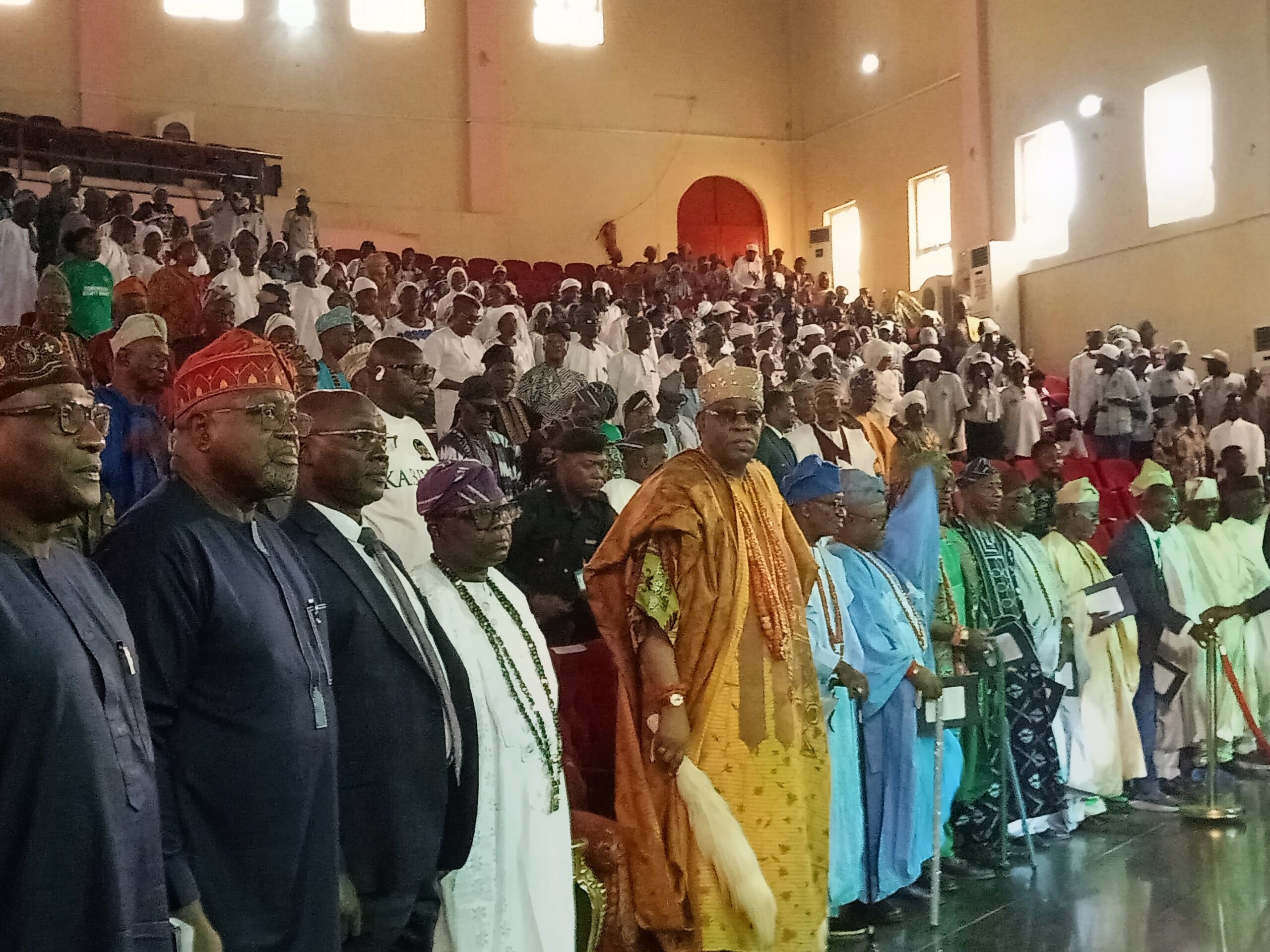
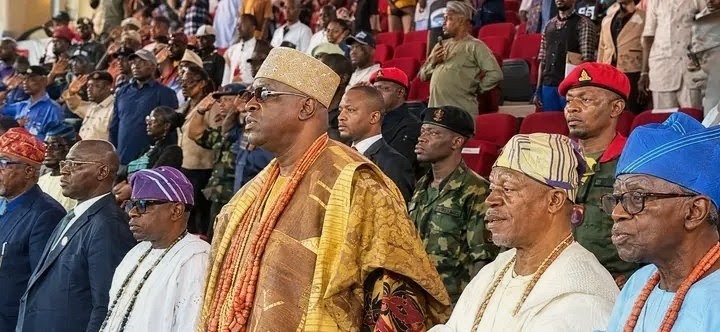
The summit packaged by the education committee of the 25 year-development plan of Oba Olaoye aims at charting a course for educational development in the community and harnessing the opportunities therein.
Advertisement

The Soun speaking at the massively attended event, said, “The world around us is changing at a pace faster than ever before. Technology, innovation, and knowledge economies are redefining power and prosperity. In this new reality, education must go beyond classrooms, textbooks, and examinations. It must prepare our children not just to take jobs, but to make decisions; not just to consume knowledge, but to create solutions,” noting he is borne by a vision to create an environment “where our young men and women are not kept at the periphery, but are seated boldly at the table where the future is being designed.”
Advertisement

Prof Kalilu who underscored the importance of community participation in education by asserting that both the Universal Basic Education (UBE) Act of 2004 and the National Policy on Education 2013 recognise and mandate community participation in various facets through resources contribution, participation in schools running, infrastructure provision and so on.
“In Nigeria, the Universal Basic Education (UBE) Act of 2004 explicitly recognises community participation as essential to achieving Education for All (EFA). The Act mandates communities to contribute resources, participate in governance, and support school infrastructure,” Kalilu said.
“Similarly, the National Policy on Education (2013, 6th edition) further institutionalises participation through Parents-Teachers Associations, School-Based Management Committees, and partnerships with civil society. These mechanisms are vital to democratizing education and ensuring that schools reflect the aspirations of local communities.”
He pointed out that community’s deep participation in education will ensure “shared responsibility for accountability and commitment,” resource mobilisation, cultural relevance as well as safety and discipline, saying with ”such participation, the institution can also explore all its potentials for the benefit of the community.”
Advertisement 
He therefore urged commitment on the part of the community, traditional and religious leaders and parents.
He also charged on engagement of students and youths in shaping education processes and fostering ownership responsibility and involvement of the private sector.
The Professor of Art and History maintained community involvement is the only way through which education can flourish in the country, consequently commending the Soun on the initiative and urging all to follow in his lead.
“In taking action, however, we should take cognizance of the fact that education is not only about schooling. Home training and apprenticeship are germane. The Yoruba proverbs, Oju merin lo n bimo, igba oju lo n wo, that is, only a couple birthed a child, but the training of the child is a communal responsibility is instructive. Home training is the bedrock of all partnerships and community participation in education and it is imperative if we are to successfully steer our communities away from vices such as drug abuse, hooliganism, rituals and cultism so as to realise the full benefits of education for national development.
Advertisement

“The future of education is not the responsibility of government alone. It is a collective project. Community participation is both a cultural inheritance and a policy imperative. The Yoruba worldview, expressed in the proverb, Ajeje owo kan o gberu dori, literally meaning one hand cannot conveniently lift a load onto the head, reminds us that progress is impossible in isolation.
“For Nigerian education to flourish, the collective involvement of communities is indispensable. And it is only through such collective effort that Nigeria can build a strong, resilient, and relevant educational system. Oba Ghandi Afolabi Olaoye has taken the lead on behalf of his land; let everyone in the land follow.”














Leave a Reply