

Soun raises concern over temporary site for new FG institution ahead inspection
Khalid ABRAHAM
Advertisement

In April this year it was announced that the Federal Government of Nigeria had decided to establish four monothecnics with bias for cultural studies.
Ogbomoso in Oyo state was named as one of the campuses of the new institution christened Nigerian Academy of Cultural Studies (NACUS), an initiative of the National Institute for Cultural Orientation, NICO.
The institution is expected to begin in September this year about two and a half months away.
However, the Soun of Ogbomoso Oba Ghandi Afolabi Olaoye Orumogege III has raised alarm that a temporary site is yet to be acquired for the take off of the school observing this might jeopardise the dream of having another federal government establishment in Ogbomoso.
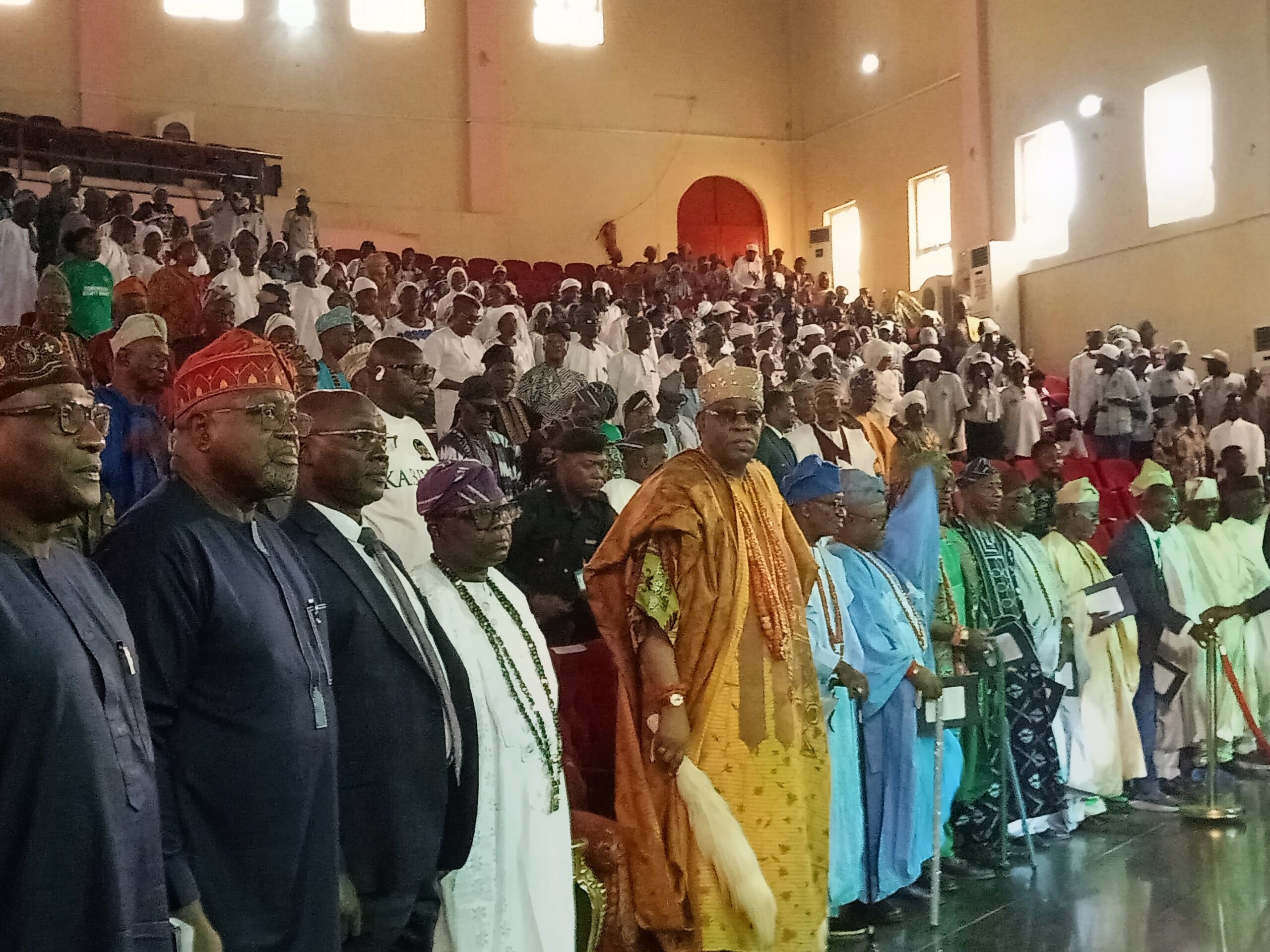
He made this disclosure at his maiden townhall meeting held Thursday at Lagbami Osekun Civic Centre Aromowole Ogbomoso.
He said this against the backdrop of practice of hoarding land in Ogbomoso expressing concern that the FG team billed to assess the preparedness of the town for takeoff might be forced to find another town.
Advertisement

“It’s part of what we have been saying,” the Oba lamented. “We are yet to secure a temporary site for the institution, NACUS, and a team will soon come to inspect the site for the planned take off in September. We have to get a location ahead of the inspection if we don’t want to miss the opportunity.”
The import is that both a temporary site and permanent site ought to have been acquired and gotten ready before the inspection. While the permanent site might remain a virgin land the temporary location must have buildings for immediate occupation.
It won’t be funny if Ogbomoso zone bungles this chance on the flimsy excuse of lack of location.
About NACUS
Source: Google
The Nigerian Academy for Cultural Studies (NACUS) is a Federal Government initiative aimed at promoting cultural education and national identity. It’s a specialized institution that will offer diploma-level training in cultural studies, with a focus on areas like Cultural Technology and Cultural Pharmacology. NACUS will begin its academic session in September 2025 with pilot campuses in Lagos, Ogbomosho, Cross River, and Abuja.
Here’s a more detailed breakdown:
Purpose and Goals:
Promote Cultural Education:
NACUS aims to instill cultural pride and understanding in Nigerian citizens by focusing on the dynamics of cultural studies.
Boost National Identity:
The academy seeks to foster a sense of national identity through the exploration and preservation of Nigeria’s rich cultural heritage.
Address Cultural Imperialism:
NACUS aims to counter the negative effects of cultural imperialism by promoting and celebrating Nigerian cultural values.
Contribute to Economic Development:
The academy will offer courses like Cultural Technology and Cultural Pharmacology, which are designed to leverage Nigeria’s natural resources and traditional knowledge for economic growth.
Advertisement

Key Features:
Pilot Campuses:
NACUS will initially operate with four pilot campuses strategically located across Nigeria to ensure broad access.
Diploma Programs:
The academy will offer diploma-level training in cultural studies, with a focus on specific areas like Cultural Technology and Cultural Pharmacology.
Industry-Relevant Curriculum:
NACUS will develop a curriculum that reflects the needs of the cultural sector and other related industries, ensuring graduates are equipped with practical skills.
Accreditation and Affiliation:
The diploma programs will be accredited by the National Board for Technical Education (NBTE), and a postgraduate diploma in cultural administration will be affiliated with Nasarawa State University, Keffi (NSUK).
In summary, NACUS is a bold initiative by the Nigerian government to revitalize the nation’s cultural heritage and promote national identity through education, while also leveraging cultural knowledge for economic development and social progress.













Leave a Reply