
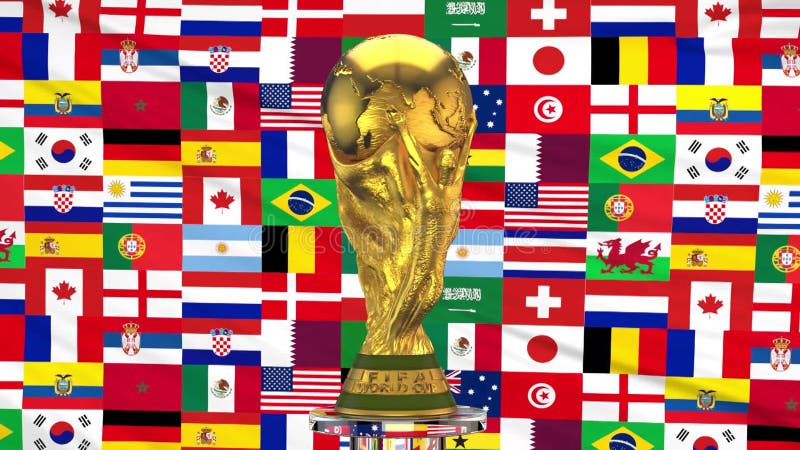
Which teams have made the strongest first impression?
Yinka ADETUNJI
Advertisement

Advertisement

The opening phase of the 2026 FIFA world cup has already begun to separate teams not only by results, but by the quality and authority of their performances. While it is still too early to make definitive judgments, certain sides have clearly made stronger early impressions through their control of matches, attacking efficiency, and ability to respond under pressure.
With matches now being played across multiple groups, patterns are beginning to emerge. Some teams have delivered emphatic statements, others have shown resilience, while a few have simply done enough to stay competitive.
Germany: The most dominant statement so far
Germany’s 7–1 victory over Curaçao stands as the most forceful performance of the tournament to this point.
What made the result particularly significant was not just the margin, but the manner in which it was achieved. Germany combined fluid attacking movement with sustained pressure, quickly recovering control even after briefly conceding. Their ability to maintain intensity throughout the match has set an early benchmark for attacking performance in the tournament.
At this stage, no other team has matched that level of dominance.
Advertisement


Sweden: A statement of attacking intent
Sweden’s 5–1 victory over Tunisia ranks among the most impressive performances of the tournament’s opening phase.
The scoreline reflected a team that combined attacking efficiency with confidence in possession. While Tunisia showed moments of promise, Sweden consistently found ways to create and convert chances, turning a competitive contest into one of the tournament’s most convincing victories.
Beyond the result itself, the performance demonstrated the kind of clinical edge that can prove decisive in major tournaments. If Sweden can maintain this level of attacking effectiveness, they may emerge as one of the more dangerous sides as the competition progresses.
United States: Strongest balanced attacking display
The United States produced one of the most convincing all-round performances with a 4–1 win over Paraguay.
Their approach was direct, energetic, and effective in exploiting defensive spaces. Unlike some other heavy wins, the USA’s performance was notable for its balance between structure and attacking sharpness. They did not simply overwhelm their opponents, but controlled key phases of the game and converted chances with confidence.
This result places them among the early teams to watch closely as the tournament progresses.
Mexico: Composed start as hosts
Co-hosts Mexico opened their campaign with a 2–0 win over South Africa in a match that required both patience and discipline.
While the match included moments of physical tension, Mexico managed the game effectively once they gained control. Their ability to stay organised and avoid panic in key phases ensured they secured a stable start in front of their home supporters.
For a host nation, early victories carry added importance, and Mexico have responded well to that expectation.
South Korea: Mental strength and tactical control
South Korea’s 2–1 comeback win over Czechia was one of the more disciplined performances of the opening stage.
After conceding first, they remained composed and gradually shifted the momentum through structured possession and improved midfield control. Their response highlighted strong tactical awareness and mental resilience, qualities that often define successful tournament teams.
Australia: Quiet but effective
Australia’s 2–0 win over Turkey may not have drawn major headlines, but it was an important early performance.
Built on organisation and defensive discipline, it reflected a controlled and efficient approach. In tournament football, such performances are often crucial in determining progression from the group stage.
Advertisement

Netherlands and Japan: A balanced contest
The 2–2 draw between the Netherlands and Japan offered a different kind of early signal.
Rather than dominance from either side, the match reflected balance and competitiveness. Both teams showed attacking quality, but neither was able to maintain sustained control. The result reinforces the idea that even traditionally strong teams are being tested early in this tournament.
Early pattern emerging across the tournament
One of the clearest early trends is that reputation alone is not determining outcomes. Matches have been closely contested, and results are increasingly shaped by discipline, efficiency, and game management.
Teams that remain composed under pressure are already standing out, while lapses in concentration are being punished quickly.
Final thought
At this stage, Germany have set the strongest benchmark, while the United States and Sweden have delivered one of the most balanced attacking performances. Mexico, South Korea, and Australia have also shown early signs of structure and efficiency.
However, as history consistently shows, world cup tournaments are not defined by first impressions alone, but by consistency over time. The real test is still ahead.
















Leave a Reply