
Ogbomoso – Ikoyi relations: The issue
Femi OGUNLANA
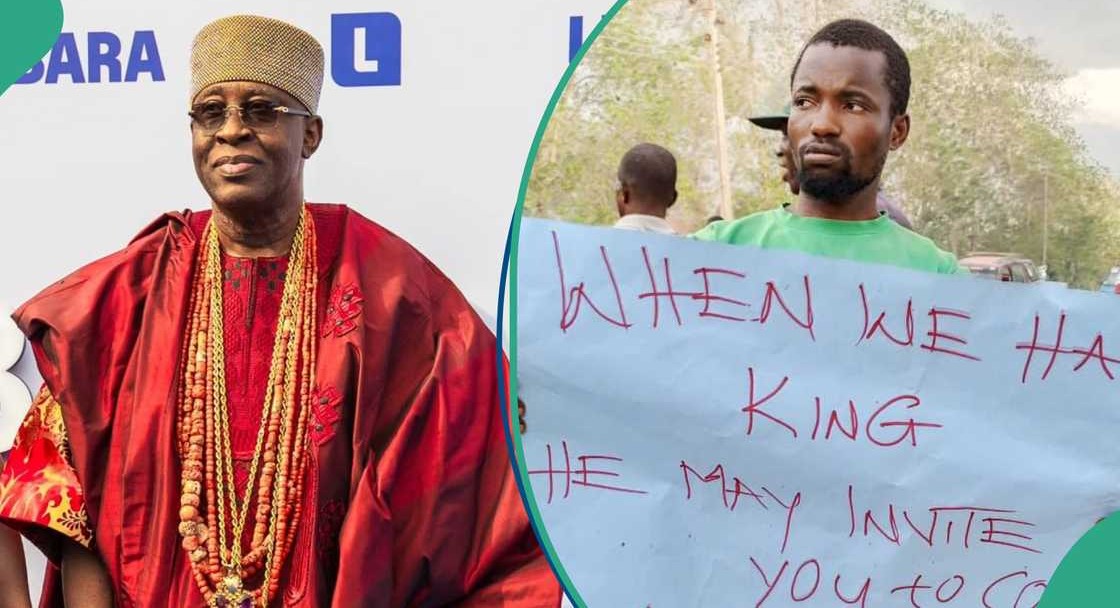
On Tuesday April 14) the Soun of Ogbomosoland His Imperial Majesty Oba Ghandi Afolabi Olaoye Orumogege III planned to hold a townhall meeting with traditional rulers and people of Oriire local government at Ikoyi-Ile headquarters of the council area. However some, people in Ikoyi embarked on protest expressing their displeasure at the planned programme. Oba Ghandi succumbed putting the event on hold. He had wanted to discuss his 25-year development for Ogbomosoland and how every part can benefit short and long terms. In this feature the historical background of the relationship between Ogbomoso and Ikoyi is looked into.
Advertisement

Advertisement

There is no doubt that Ikoyi preceded Ogbomoso in founding. Ikoyi is believed to have been founded at about the same time as Oyo Kingdom, it is said the founders left Ile-Ife together on an expedition. But Ikoyi became a vassal town to Oyo, and a provincial headquarters of Oyo later when the latter rose to prominence.
But gradually due to acts of valour Ogbomoso began to rise in power and importance too. Both being in the same axis, inevitably the two communities began to inter-relate. At some point they became rivals. The rapid ascendancy being gained by Ogbomoso perhaps was bothersome. But interestingly, Ogbomoso never had frosty relationship with other classical Kingdoms in the neighbourhood such as Ijeru, Igbon, Iresa and Ajaawa. Though some of them were also provincial headquarters of the Oyo Empire. With Ikoyi however, the bonding was never cemented. It is well known that the maternal ancestry of Soun Ogunlola could be traced to Iresa, in fact his mother, Omoninla, was a daughter of a former Aresa. His father according to “Iwe Itan Ogbomoso,” by N.D. Oyerinde, also had deep association with a former Olugbon. The Onpetus and the Souns intermarried making them in-laws. Brave soldiers from these kingdoms such as Generals Lasinmiran, Kufeji, Oyeniya and so on, from Onpetu Ijeru particularly fought on the side of the enclave that became generally known as Ogbomoso today. Really, warriors from all these other kingdoms allied to checkmate the fierce invasions by the Ilorin army led by the Fulani in the 19th century. But it is not on record Ikoyi soldiers joined the coalition, arrow-headed by Ogbomoso.
Advertisemnt

Advertisement

In fact, it is captured in historical records that when Toyeje (Soun of Ogbomoso) was appointed Aare Ona Kakanfo of Yorubaland, the Oba of Ikoyi then Adegun being a powerful monarch too opposed the appointment and installed a rival Kakanfo.
Ogbomoso and Ikoyi mostly were never on the same page. As an instance, after the fall of Ilorin (in the hands of the Fulani) aftermath the killing of Afonja (traditional head of Ilorin and Kakanfo), and Toyeje who succeeded him as Kakanfo, led several wars to liberate Ilorin (a Yoruba town) from the Fulanis, the Onikoyi (Adegun), also a redoubtable warrior, never fully supported the campaign to liberate Ilorin. According to Iwe Itan Ogbomoso, there were three leading warriors in Yorubaland then – Toyeje, Adegun and Solagberu (the latter was based near Ilorin at Oke-Suna). Only Toyeje was said to have fully stood for Yorubaland in the various wars. While Adegun joined in prosecuting the various wars, it was half-heartedly (changing sides frequently and yielding at critical times to thwart victory for the Yoruba army), Solagberu sided with Ilorin to frustrate the efforts. Thus, Ilorin was never taken back.
Later, war broke out between Toyeje (Ogbomoso) and Adegun (Ikoyi) and the latter was on the verge of defeat when the Ikoyis appealed to the Fulani who came with their horses to disperse the warriors. Thus, Ikoyi, after the fall of Oyo-Ile (its former lord), precipitated by the Fulani, began to lean towards Ilorin even before. And eventually, when Ikoyi met with vicissitudes owing to succession feuds and besieged by various external wars, it was deserted, and some of them fled to Ilorin to take refuge, some to Ogbomoso and other places, abandoning their town. Years later, it was some of those that fled to Ilorin that first returned to their ruined town to salvage it and they took control.
Also at some point, the reigning Onpetu, Atoyebi, due to vagaries of life occasioned by war fled from Oje, the former capital of the Ojes (Onpetus) to Ikoyi for shelter, the then Onikoyi being his friend. But that Onikoyi often spoke ill of the Soun of the time, threatening he would invade his palace. Atoyebi didn’t like it and often cautioned Onikoyi reminding him that Soun was his friend too. Onikoyi took offence regarding this position of Onpetu Atoyebi, and planned to assassinate him but a slave who was privy to the plan informed Atoyebi and so, he escaped to Ogbomoso, where he first settled at Akinbola House at Laka before the Soun asked him to join Oje people who had earlier settled at Ijeru.
So, some powerful elements in Ikoyi especially the Ilorin returnees have never been favourably disposed to Ogbomoso. Although, this is not so with the Ikoyis who migrated to Ogbomoso specifically, Osupa quarters – there is Koyiodan compound at Osupa, where Chief Lere Paimo (Baba Eda Onileola), Prince Tunde Aremu (CEO of Irorun Agbe Farm Booster) and others hail from.
Advertisement

Advertiseme nt
nt
But Ogbomoso persistently has an edge and finally consolidated its hegemony over Ikoyi in 1984.
As early as the early 20th century the Alaafin of Oyo laid claim to land up to Oba River as the boundary between Oyo and Ogbomoso. That was audacious and unacceptable to Ogbomoso. This implied that all communities beyond the Oba River such as Oolo, Maya, Iluju, Ikoyi, Aipo, Ogede, Obamo, Tewure, Alaroponla etc all belonged to Oyo. Ogbomoso was fiercely opposed to this. Whereas, those are towns and villages that sought refuge in Ogbomoso during the Fulani Wars and they even have family compounds in Ogbomoso. What that further meant was that Ogbomoso’s land wouldn’t have extended beyond Odo-Oba and Ikose in both directions. Adegoke Atanda Layode (1908 -1914) instituted a case against this at the court, claiming Ipeba rather was the boundary. Most successive Souns and the people of the town did not take it up after Olayode’s death. His son, Soun Lajide Olayode (1966 – 1969) however resuscitated the case but his early death put spanners in the work again. The ascension of Oba Oladunni Oyewumi Ajagungbade III in 1973 meanwhile breathed life into it. Oba Ajagungbade III pursued the case solely with vigour spending his personal money. The case got to the Supreme Court and in 1984, judgement was delivered in favour of Ogbomoso and Ipeba was set as the boundary between the two towns, thus Ikoyi and the large chunk of what became Oriire local government area today came under the suzerainty of Ogbomoso and became part of Ogbomosoland. Some of the communities resisted it and sided with the Alaafin but it was a modern-day war fought in the court. The Soun attained victory, effectively bringing Ikoyi under Ogbomoso. Ikoyi came under the administrative structure of Ogbomoso – Ogbomoso local government. When new local governments were created it became the capital of Oriire local government. But remains in Ogbomoso zone.
That perhaps remains a source of perpetual bitterness. A case of a former aburo attaining superiority. So, the animosity is historically rooted.










Leave a Reply